

How the LiDAR Sensor in the New iPad Can Be a Game-Changer for AR
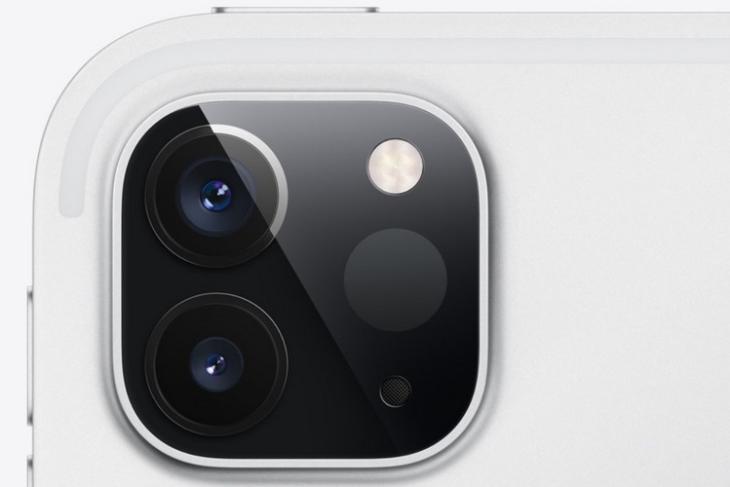
Apple has leaned towards Augmented Reality (AR) for a long time. The company started emphasizing on AR with the launch of their ARKit dorsum in 2017. Since and then, the Cupertino-based tech giant has been experimenting with AR and developing it with each passing year. Yet, this twelvemonth, the company launched its latest iPad Pro that comes equipped with a hardware component that specifically enhances the AR capabilities of the mobile device. Yep, you guessed it right, the LiDAR sensor.
How LiDAR Works
Calorie-free Detection and Ranging (LiDAR) is a engineering science that is ofttimes used in automated robots and cars to map the real world. The sensor works with the help of laser beams. These laser beams are emitted into the environment by the projectors and the sensor waits for the reflection of these laser beams to return. As the reflections bear on the sensor, the system calculates the amount of fourth dimension each laser beam took to return to the sensor and based on this analysis a 3D map of the real earth is made.
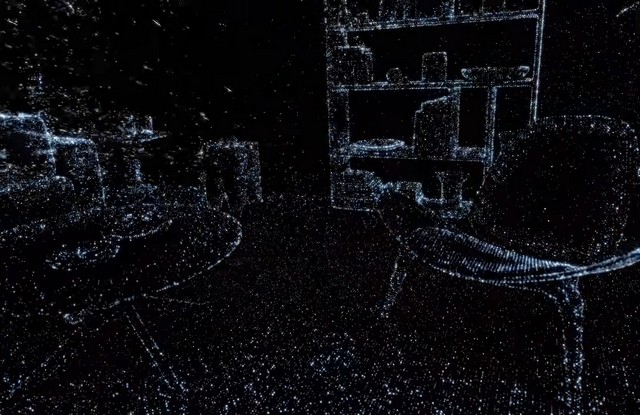
Now, decent traditional LiDAR sensors are equally large as the size of a fist and are actually expensive. Apple tree somehow was able to cram in an operational LiDAR sensor inside the iPhone 11-like camera module of the latest iPad Pro. Now, this move improves the AR capabilities of the mobile device by many folds.
How Does AR Work Without LiDAR System?
AR that works with the help of computer vision (like in iPhones) depend on the motility of the camera to analyse the environment. So, to make AR work efficiently, you have to move your camera very advisedly for the organization to recognise flat surfaces. Nevertheless, LiDAR sensors work instantly and do not crave whatever careful movements. It starts to map the environment equally soon as yous open the camera and creates a 3D model of the real world in no fourth dimension.
How Can LiDAR Ameliorate AR in Mobile Devices?
Now, LiDAR sensors in mobile devices can open up upwards a whole range of AR possibilities and also eradicate some of the limitations of the traditional AR system. Firstly, information technology is fashion faster than computer vision AR and tin map the world in real-time. Secondly, it is much more authentic in capturing the details of the surroundings. And third, unlike computer vision-dependent AR, LiDAR sensors do not need any light to capture objects in the environment. Instead, it uses light amplification by stimulated emission of radiation beams that enable the system to see things without any visible calorie-free.
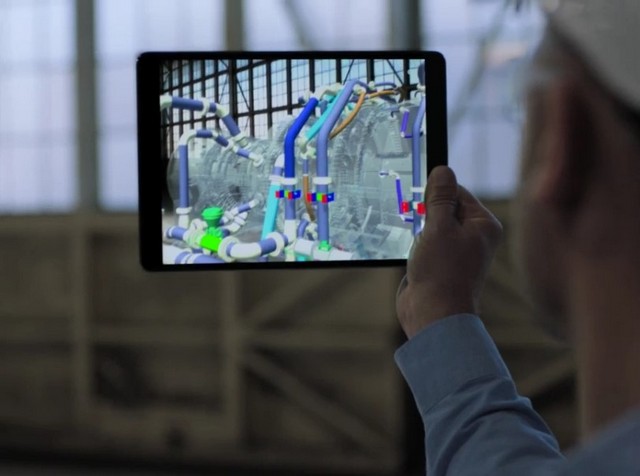
These limitations are prevalent in contempo mobile devices with AR capabilities, but non in the iPad Pro. Equally Apple was able to fit a LiDAR sensor in an iPad, it won't be a shocker if they integrate i in their upcoming iPhones besides, as the leaks propose.

Source: https://beebom.com/how-lidar-sensor-new-ipad-works-ar/
Posted by: jenkinscrushe2000.blogspot.com
0 Response to "How the LiDAR Sensor in the New iPad Can Be a Game-Changer for AR"
Post a Comment